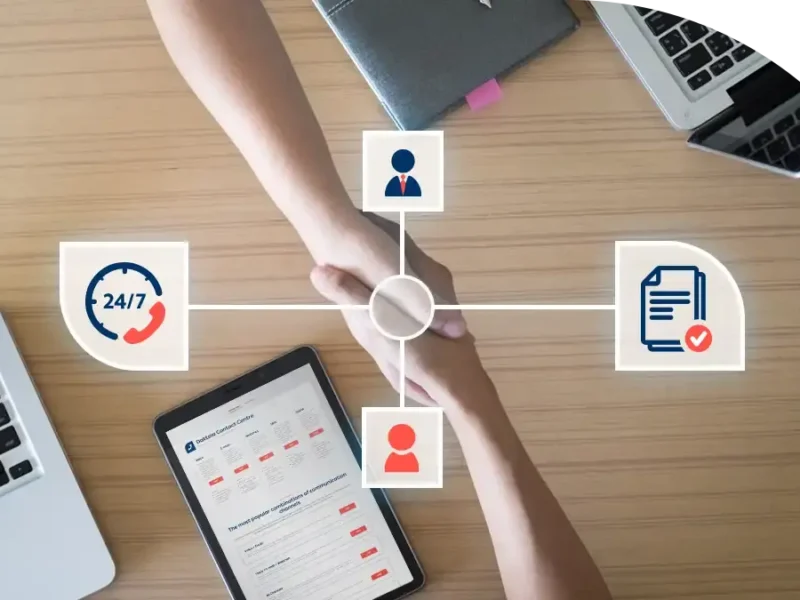
In 2025, small businesses face the same challenge as industry giants: delivering exceptional customer experiences in a fast-paced, data-driven world. The difference? Limited resources. That’s where a well-executed CRM strategy becomes your secret weapon.
Customer Relationship Management (CRM) tools aren’t just for keeping contacts organized—they’re central to sales, service, and sustainable growth. But simply installing a CRM won’t move the needle. You need smart practices that extract maximum value.
This guide walks you through the top CRM best practices for small businesses, built to drive retention, revenue, and resilience.
🔍 Why CRM Is a Game-Changer for Small Businesses
CRM systems help you manage leads, nurture relationships, and stay organized—all in one place. For small teams, this means:
- 🔄 Less time juggling spreadsheets
- 🤝 Stronger, more consistent customer interactions
- 📊 Smarter, data-driven decisions
A CRM isn’t just a tool—it’s a growth strategy.
✅ 12 CRM Best Practices for Long-Term Success
1. 🧼 Start with Clean, Accurate Data
Your CRM is only as good as the data inside it.
- Audit regularly: Remove duplicates, outdated contacts, and incomplete entries.
- Set clear rules: Standardize how names, emails, and tags are entered to keep things tidy across your team.
2. ⚙️ Automate Repetitive Tasks
Your team should focus on customers—not manual admin.
- Automate follow-ups, reminders, and task assignments.
- Set up customer journeys to guide leads from discovery to conversion without lifting a finger.
3. 🧠 Segment Customers for Smarter Outreach
A one-size-fits-all approach leaves money on the table.
- Segment contacts by behavior, purchase history, or location.
- Send tailored messages that feel personal—and convert better.
4. 📈 Use CRM Analytics to Guide Decisions
Your CRM should be more than a database—it should be a source of insight.
- Track KPIs like close rates, customer lifetime value, and churn.
- Use reports to spot trends and forecast future demand.
5. 🧾 Standardize Your Data Entry
Inconsistent data = inconsistent outcomes.
- Create templates for entering new contacts or opportunities.
- Train your team to follow the same process so everyone’s on the same page.
6. 📋 Monitor Sales Activities Closely
Visibility drives accountability.
- Use your CRM to track every deal stage and interaction.
- Review team performance and optimize your pipeline strategy accordingly.
7. 🔌 Integrate with the Rest of Your Tech Stack
Don’t let your CRM work in isolation.
- Connect it to your email, invoicing, marketing tools, and more.
- Integration saves time, eliminates duplicate work, and gives a 360° customer view.
8. 💡 Focus on Customer Retention
Acquiring customers is hard. Keeping them is easier—and more profitable.
- Use your CRM to set up loyalty programs, re-engagement campaigns, and upsell opportunities.
- Build lasting relationships with proactive outreach.
9. 📲 Choose a Mobile-Friendly CRM
Your team needs access on the go—especially sales reps and field agents.
- Pick a CRM with a solid mobile app.
- Enable real-time updates and mobile notifications to stay responsive anywhere.
10. 🧑🏫 Prioritize Ongoing Training
A powerful CRM is useless if your team doesn’t know how to use it.
- Host regular training sessions to reinforce best practices.
- Encourage self-learning with tutorials, webinars, and certification programs.
11. 🗣️ Gather and Act on Customer Feedback
Your CRM can power continuous improvement.
- Automate post-sale feedback requests or NPS surveys.
- Use insights to refine your offerings, messaging, and service processes.
12. 🤝 Foster Collaboration Across Teams
Don’t silo your CRM to just one department.
- Give sales, marketing, and support shared access and visibility.
- Host regular syncs to align efforts and share customer insights.
🎯 Final Thoughts: CRM Success Is a Habit, Not a Feature
A CRM won’t magically grow your business overnight—but with the right habits and strategies, it can transform how you connect with your customers and scale with confidence.
Here’s your quick success checklist:
✅ Clean, consistent data
✅ Personalized, automated engagement
✅ Teamwide adoption and training
✅ Real-time insights and reporting
✅ A focus on retention over acquisition
In 2025, the small businesses that win won’t be the ones with the most tools—they’ll be the ones who use them best.
Looking to upgrade your CRM strategy?
Let’s talk tools, integrations, and setup tips tailored to your unique growth stage.